
The best stainless steel fasteners for food equipment are typically made from 316 stainless steel or 18-8 stainless, as they offer strong corrosion resistance needs, meet strict hygiene requirements, and support safe surface finishing processes. These materials help prevent contamination, resist cleaning chemicals, and ensure long-term durability in food processing environments.
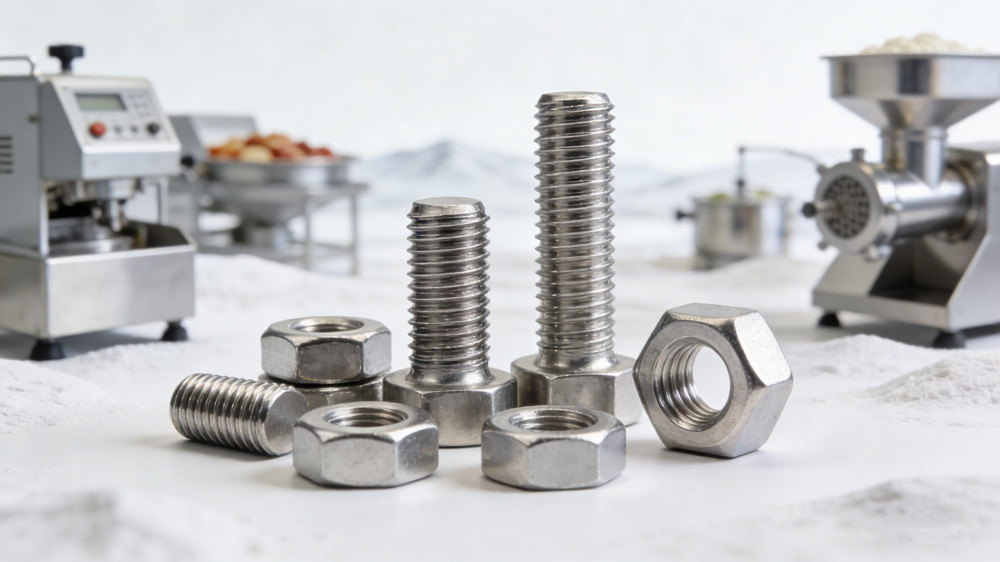
Food processing environments demand materials that are safe, durable, and easy to maintain. Since steel fasteners are used throughout equipment such as conveyors, mixers, tanks, and packaging machines, choosing the right type is essential for maintaining cleanliness and product safety.
Not all fasteners are suitable for food-grade applications. Understanding material grades, hygiene requirements, and surface finishing options helps buyers select fasteners that meet both regulatory standards and operational needs.
1. Hygiene Requirements for Food Equipment Fasteners
Food equipment must meet strict sanitation standards to prevent contamination.
Key hygiene considerations:
- Smooth, non-porous surfaces
- Resistance to bacterial growth
- Easy cleaning and sterilization
- Compatibility with cleaning agents
Fasteners used in these environments must avoid crevices where bacteria can accumulate. Materials like 18-8 stainless and 316 stainless steel are widely used because they support these hygiene requirements.
2. Corrosion Resistance Needs in Food Processing
Food production often involves exposure to:
- Water and steam
- Acids and salts
- Cleaning chemicals and disinfectants
These conditions increase the corrosion resistance needs of fasteners.
Material comparison:
- 316 stainless steel High resistance to corrosion Suitable for harsh cleaning environments and acidic conditions
- 18-8 stainless Good general corrosion resistance Suitable for dry or less aggressive environments
Selecting the right material ensures longer service life and reduces maintenance costs.
3. Why 316 Stainless Steel Is Preferred
316 stainless steel contains molybdenum, which improves its resistance to corrosion.
Advantages:
- Performs well in high-moisture environments
- Resists aggressive cleaning chemicals
- Suitable for dairy, beverage, and seafood processing
For equipment exposed to frequent washdowns or salt-containing products, 316 is often the preferred option.
4. When to Use 18-8 Stainless
18-8 stainless (commonly equivalent to 304 grade) is widely used in food equipment.
Benefits:
- Cost-effective
- Good corrosion resistance for general applications
- Readily available
It is suitable for environments where exposure to harsh chemicals is limited, making it a practical choice for many types of steel fasteners.
5. Surface Finishing and Its Importance
Proper surface finishing improves both hygiene and durability.
Common finishing methods:
- Polishing → creates smooth surfaces that are easier to clean
- Passivation → enhances corrosion resistance
- Electropolishing → reduces surface roughness and contamination risk
A well-finished fastener minimizes the chance of bacteria buildup and supports compliance with food safety standards.
6. Types of Stainless Steel Fasteners Used in Food Equipment
A wide range of fasteners are used in food processing systems.
Stainless steel fasteners include:
- Bolts and hex screws
- Nuts and lock nuts
- Washers
- Studs and threaded rods
These components must be selected based on both mechanical requirements and environmental conditions.
7. Compliance with Food Safety Standards
Food equipment fasteners often need to comply with:
- FDA guidelines
- EU food safety regulations
- ISO standards
Choosing quality stainless steel materials ensures compliance and reduces risk during inspections.
8. How to Select the Right Fastener for Your Application
When choosing fasteners, consider:
- Operating environment (wet, dry, chemical exposure)
- Cleaning frequency
- Load requirements
- Budget constraints
A combination of proper material (such as 316 stainless steel or 18-8 stainless), suitable surface finishing, and reliable manufacturing ensures optimal performance.
Conclusion
Selecting the best stainless steel fasteners for food equipment involves balancing hygiene requirements, corrosion resistance needs, and cost considerations. Materials like 316 stainless steel and 18-8 stainless provide dependable performance across a wide range of applications. Combined with proper surface finishing, these fasteners help maintain cleanliness, durability, and compliance in demanding food processing environments.
FAQs
1. What are the best stainless steel fasteners for food equipment?
The most commonly used options are 316 stainless steel and 18-8 stainless, as they meet hygiene and corrosion resistance requirements.
2. Why is corrosion resistance important in food processing?
Food environments involve moisture, chemicals, and cleaning agents, which increase the risk of corrosion and contamination.
3. Is 18-8 stainless suitable for all food applications?
It is suitable for general use, but 316 stainless steel is preferred for more demanding environments.
4. What surface finishing is best for food-grade fasteners?
Polishing and electropolishing are commonly used because they create smooth, easy-to-clean surfaces.
5. Do all steel fasteners meet food safety standards?
No, only fasteners made from appropriate stainless steel grades and processed with proper finishing can meet food safety requirements.